What is inshore fishing in Gulf Shores?
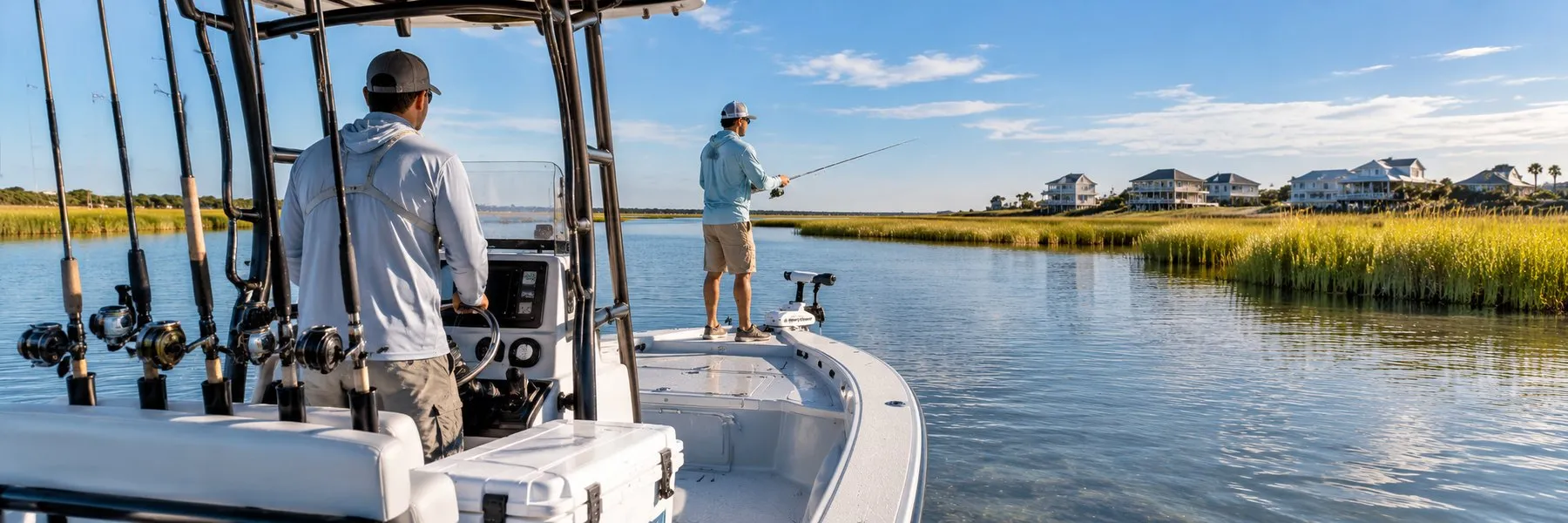
Inshore fishing means working the protected water behind the island rather than the open Gulf — the bays, passes, waterways and grass flats. Boats are smaller, runs are short, the water is calmer, and the target species are redfish, speckled trout, flounder and sheepshead on light tackle.
The water
Gulf Shores sits on a barrier island with a substantial system of protected water behind it. Bon Secour Bay and the wider Mobile Bay system lie to the west and north, Little Lagoon runs behind the beach, the Intracoastal Waterway crosses the whole area, and Perdido Pass to the east connects the back bays to the Gulf. Inshore trips work some combination of those, depending on tide, wind and what is feeding.
Passes are worth understanding as a fisherman rather than a geographer: they are where bay water and Gulf water exchange on the tide, which concentrates bait, which concentrates fish. A guide who talks about fishing a moving tide is talking about this.
Why it is often the better recommendation
Most first-time visitors book offshore because that is the fishing they have seen photographs of. For a meaningful share of them, inshore is the trip they would actually have enjoyed more. Three reasons:
- Seasickness. The single biggest ruiner of a family fishing day, and largely a non-issue in protected water.
- Action. Inshore fishing generally means more bites, more casting and more moving between spots. Bottom fishing offshore can involve long quiet stretches.
- Length. Three or four hours is a normal inshore trip. That is about the honest attention span of a young child on a boat.
| Inshore | Offshore | |
|---|---|---|
| Water | Bays, passes, waterway and grass flats | The open Gulf, over reefs and wrecks |
| Boat | Bay boat or flats skiff | Larger vessel built for the run |
| Sea state | Protected — fishable in wind that stops offshore trips | Exposed; wind and swell decide the day |
| Seasickness | Largely a non-issue | A real planning constraint |
| Tackle | Light spinning, casting at structure | Heavier bottom gear and trolling |
| Species | Redfish, speckled trout, flounder, sheepshead | Snapper, grouper, amberjack, mackerel, tuna |
| Trip length | Shorter — three or four hours is normal | Six hours upward, because range costs time |
What you are fishing with
Light spinning tackle, live or artificial bait, and a lot of casting at structure — grass edges, drop-offs, docks, oyster bottom and bridge pilings. It is a more active, more technical style of fishing than dropping a weighted rig to the bottom offshore, and many people find it more engaging once they have tried both.
Seasons and regulation
Inshore species carry their own size and bag limits, set by the Alabama Department of Conservation and Natural Resources, and some have closed periods. They are not the same rules as the federally managed offshore reef species — see fish species for what runs when and best time to go for the shape of the year. Check current limits with the regulator rather than relying on any page, including this one, for a number that changes.
Boats and guides
Inshore trips generally run on bay boats or flats skiffs carrying a small number of anglers, which is why an inshore charter is usually private by default rather than sold by the seat. Specifics of the local guide fleet are not something this guide will invent:
If you want both
Plenty of visitors do one of each across a week. If you only have one day and the forecast is unsettled, inshore is the safer booking. If the weather is set fair and the group can handle a long day, read deep sea fishing and offshore fishing before deciding.
Inshore fishing questions
What counts as inshore fishing here?
Fishing the protected water behind and around the island rather than the open Gulf — the bays, back bays, passes, the Intracoastal Waterway and the grass flats. Boats are smaller, runs are shorter and the water is far calmer than offshore.
What do you catch inshore?
Redfish, speckled trout, flounder and sheepshead are the mainstays, with white trout, ladyfish and black drum common. Species shift with season and water temperature. These are smaller fish than the offshore reef species, caught on much lighter tackle.
Is inshore fishing better for children?
Usually, yes. The water is calmer, so seasickness is far less likely, trips are shorter, and there is more happening — inshore fishing tends to involve more bites and more movement, which holds a child's attention better than waiting over deep structure.
Is inshore cheaper than offshore?
Generally, because a smaller boat burning less fuel over a shorter run costs less to operate. Treat it as a different trip rather than a discounted version of the offshore one, though: the tackle, the species and the whole character of the day are different.
Can you fish inshore when it is too rough to go offshore?
Often, and this is one of inshore fishing's real advantages. Protected water stays fishable in wind that would cancel an offshore trip. If your holiday has one fishing day in it and the forecast is marginal, inshore is the more reliable booking.
Next step
Looking for fishing trips in Gulf Shores or Orange Beach?
Fishing Charters Gulf Shores is an independent guide — no boats, no bookings, nothing to sell. It exists so you can ask better questions before you hand an operator a deposit.
Fishing Charters Gulf Shores takes no bookings and earns nothing from a click. You book with the operator directly.