What is deep sea fishing out of Gulf Shores?
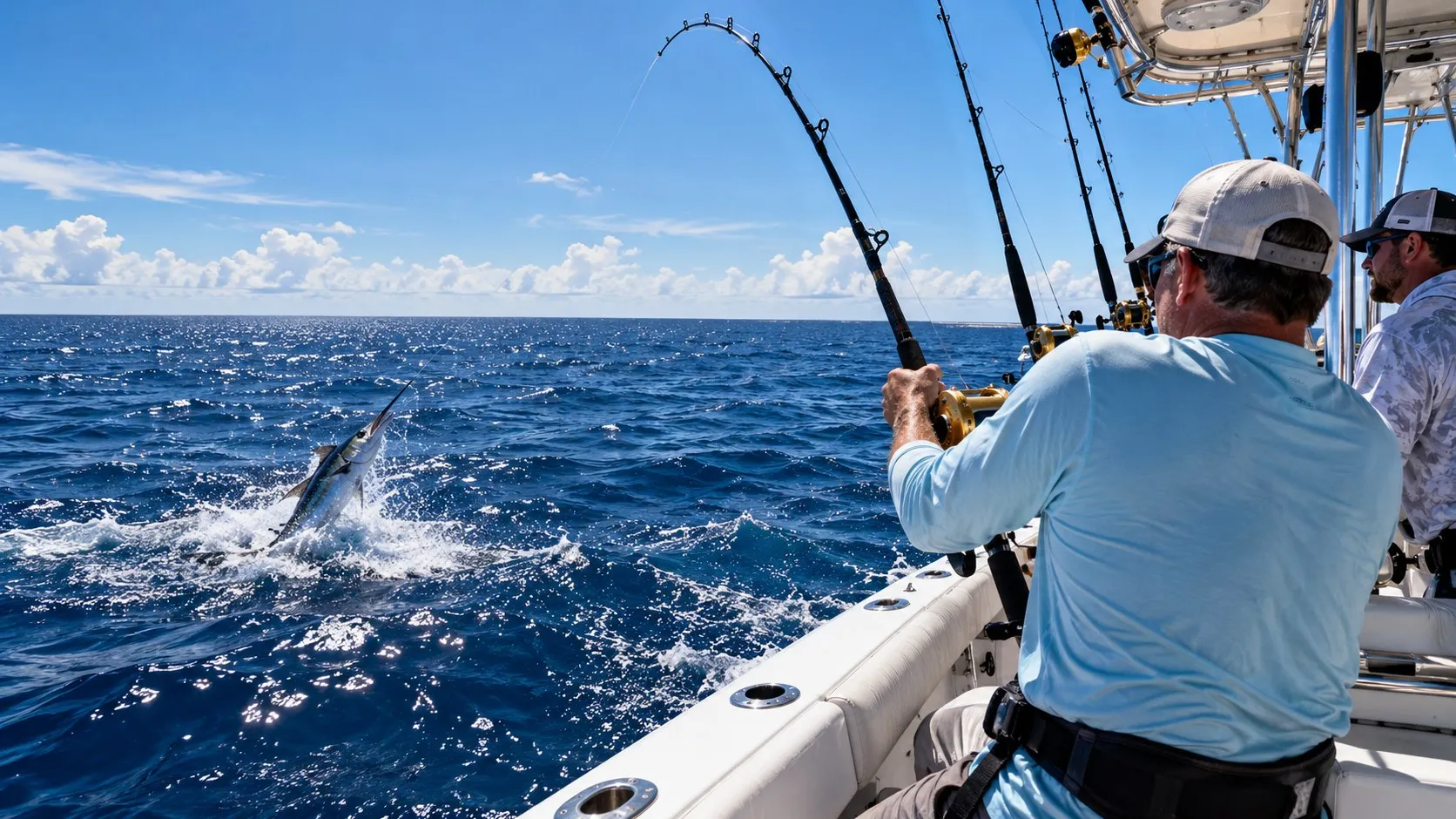
Deep sea fishing out of Gulf Shores means running offshore into the Gulf of Mexico to fish structure — artificial reefs, wrecks and natural bottom — rather than the bays behind the island. Trips usually run six hours or longer, because the productive bottom sits well beyond sight of the beach.
Range is the thing you are actually buying
Every other difference between deep sea trips follows from one variable: how far the boat can get from the pass and still be back on time. Fuel and hours are the cost, and distance is what they buy. That is why trip length is the first question an operator asks, and why two trips at different lengths are not the same trip with more hours bolted on — they fish different water entirely.
Nearer bottom gets worked hard, because it is reachable by everyone, including private boats running out for an afternoon. Structure further offshore sees far fewer lines. That does not guarantee a better day, but it is the reason longer trips exist and the reason they cost what they do.
Why the bottom matters more than the water
This part of the Gulf has a soft, largely featureless bottom. Fish concentrate on whatever breaks that up: natural hard bottom, wrecks, and a very large number of deliberately placed artificial reefs. Alabama runs one of the more substantial artificial reef programs in the country through the Marine Resources Division of the Alabama Department of Conservation and Natural Resources, and that program is the practical reason a comparatively short stretch of coast supports the charter fleet it does.
For you as a passenger this has a concrete consequence: a deep sea trip is usually a sequence of stops on specific pieces of structure, not a slow troll across open water. Numbers for productive spots are the working capital of a charter business, and no operator is obliged to share them.
What you are likely to be fishing for
Bottom fishing over reefs and wrecks is the core of it — snapper, triggerfish, grouper and amberjack are the species most people picture when they book. Trolling on the way out or between stops adds the pelagic species that move through: king and Spanish mackerel, and further offshore the tuna and mahi-mahi. Which of those is realistic on a given day is a function of season, distance and regulation rather than preference. The species guide covers what runs when, and best time to go puts it on a calendar.
Sharks are the species people ask about most often without meaning to book a trip for them, and they turn up on ordinary offshore days — usually as something that takes a hooked fish on the way up rather than as the target. Where a boat does fish for them deliberately, the rules are stricter than for anything else on this page: sharks are federally managed, the rules are species-specific, and a number of species may not be kept at all. A boat targeting them in federal water needs its own federal permit to do it. If that is the trip you want, ask the operator directly whether they run it rather than assuming any offshore charter will.
Seasons and limits are set by regulators, not by the boat
Red snapper is the species most visitors ask about, and its season is set annually rather than being fixed. Alabama manages its own recreational red snapper season under a federal framework, and the dates, bag limits and size limits are published by the Alabama Department of Conservation and Natural Resources ahead of each season. Federal waters seasons for other species are set through NOAA Fisheries and the Gulf of Mexico Fishery Management Council.
The practical version: check the current year's dates with the regulator or your operator before you plan a trip around one species. A page like this one cannot tell you this season's dates without going stale, and a wrong date is worse than no date.
How deep sea differs from an inshore trip
Inshore trips work the bays, passes and grass flats behind the island — shorter runs, calmer water, lighter tackle, different species. They are a genuinely different day out rather than a cheaper version of the same one. If the deciding factor for your group is sea sickness, budget, or having young children aboard, read inshore fishing before booking offshore. If the deciding factor is the size of the fish, offshore fishing goes further into what distance buys you.
Choosing between a private boat and a shared one
The same water is fished both ways. On a private charter you take the whole boat and the trip is planned around your group. On a party boat you buy a single seat on a larger vessel alongside other anglers. Party boats are the cheaper way for one or two people to get offshore; private charters make more sense once you have a group, and give you a say in how the day runs.
Trip lengths
Most fleets sell trips in standard blocks, and the two most common starting points are the half-day charter and the full-day charter. A half day is the usual first offshore trip for a family. A full day is where the range opens up and where most serious bottom fishing gets done.
What is included
Rods, reels, terminal tackle, bait, ice and the license covering the vessel are commonly part of the trip. Food, drink, and the crew gratuity commonly are not. Because this varies by operator, it is one of the specifics this guide will not guess at:
The licence question is the one people most often get wrong, and it is answered in full — with the state's own current rules — on do you need a fishing license for a charter in Alabama.
Read what to bring for the packing list that follows from that, and what to expect for how a charter day actually runs from dock call to fish cleaning.
Where boats leave from
Not from Gulf Shores. Every operator on the charter operators page departs from a marina in Orange Beach, immediately east along the coast, so a trip sold as Gulf Shores fishing is one you drive to the next town for. It changes your journey and your alarm rather than the fishing.
The five departure points, their addresses and which operator leaves from each are on the marinas page. Which town to stay in is a different question, and that one is on fishing near Gulf Shores.
Deep sea fishing questions
How far offshore do deep sea trips from Gulf Shores go?
It depends entirely on trip length, because range is what you are buying. A short trip works the nearer bottom within sight of shore or just beyond it. A full day reaches structure much further out. An overnight trip reaches water a day boat cannot work and return from. Ask any operator for the specific range their trip covers.
Is deep sea fishing the same as offshore fishing?
In everyday use around Gulf Shores the two terms are used interchangeably, and most operators list trips under both. Both mean leaving the bays and passes to fish the Gulf itself. If you want the distinction drawn precisely, treat trip length and target species as the real signal rather than which of the two words appears in the listing.
Do I need a fishing license for a deep sea charter?
Licensing for saltwater anglers in Alabama is set by the Alabama Department of Conservation and Natural Resources. Charter and party boats are themselves licensed, and operators will tell you whether passengers are covered by the vessel or need an individual license. Confirm it when you book rather than assuming either way.
What happens if the weather is bad?
Offshore trips are cancelled or moved far more often than inshore ones, because the same wind that is a nuisance in the bay is a genuinely rough ride twenty miles out. Every operator sets its own weather and refund policy. Read it before you pay a deposit, and build a spare day into a fishing trip if you can.
Is deep sea fishing suitable for children or first-timers?
Many people do it with no experience at all, and crews expect that. The honest constraints are seasickness and duration: a long day offshore with no option to turn back early is hard on anyone prone to motion sickness. First-timers and young children often do better on a shorter trip or an inshore trip first.
Do they clean the fish you catch?
Cleaning and filleting at the dock is common practice and is often included or offered for a fee, but it is set per operator rather than by any general rule. If you are planning to cook or freeze your catch, ask what is included and bring a cooler.
Next step
Looking for fishing trips in Gulf Shores or Orange Beach?
Fishing Charters Gulf Shores is an independent guide — no boats, no bookings, nothing to sell. It exists so you can ask better questions before you hand an operator a deposit.
Fishing Charters Gulf Shores takes no bookings and earns nothing from a click. You book with the operator directly.